

STON.fi dApp is built for action: swapping, farming, staking, providing and managing liquidity. Some of its simple but useful features are easy to overlook, still they help users better understand tokens, pools, rewards, and price movement directly in the interface.
| In #STONchronicles we share the technical breakthroughs and product milestones that showcase our commitment to building the future of DeFi on TON. |
That has always been part of STON.fi’s broader mission: to make DeFi more accessible without oversimplifying how it works. Some of the most useful improvements in the dApp are small interface features that help users better understand tokens, pools, rewards, and price movement directly in the app.
Here are four useful STON.fi dApp features you may have missed.
1. Token labels giving you more context
STON.fi no longer treats all non-standard tokens as one vague category. Instead, the interface uses a more detailed labeling system that helps users understand what exactly stands out about a token before they interact with it. Labels include such categories as Fake, Honeypot, Taxable etc.
That difference matters. A token that imitates a well-known asset is not the same as a token with extra swap fees in its contract. A token that cannot be sold is not the same as a token associated with an intellectual property complaint. Labels make that context visible.
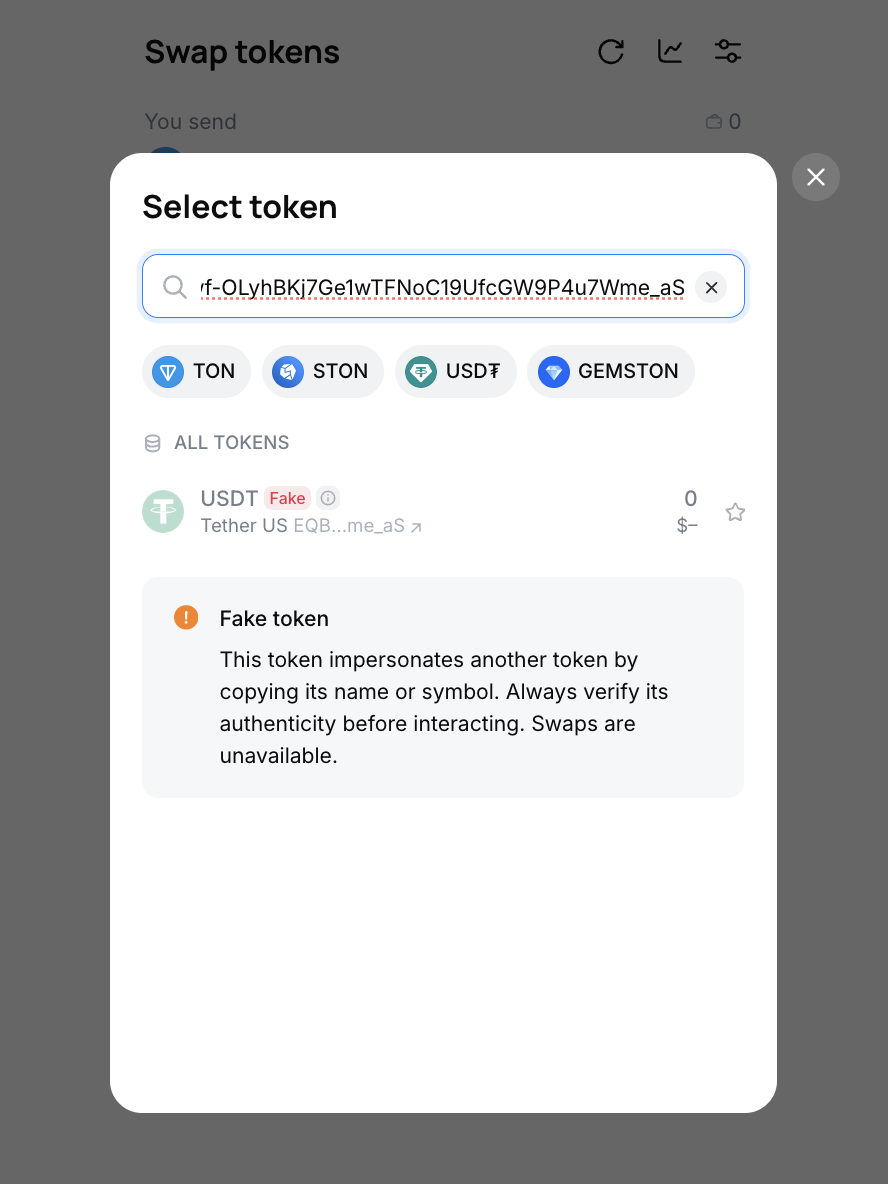
If a token has one of these labels, it can only be found by entering its contract address manually. Depending on the category, the interface may also show warnings or restrict swapping directly in the dApp. This helps users understand what they are dealing with before interaction, instead of discovering it after the fact.
2. Yield-bearing tokens APY in pools
Another useful detail appears in pools that include yield-bearing assets such as tsTON or tsUSDe (a staked version of TON or USDe). In those cases, the interface can show the APY of that token directly in the pool view.
This is helpful because pool returns do not always come from just one source.
When users look at a pool, they often focus on pool APR or farming rewards. But if one of the assets inside the pair is itself a staked version of TON or USDe, that asset may also contribute its own return profile. Showing the token APY in the interface makes the structure of the opportunity easier to read.

That means a user does not have to guess whether a pool looks attractive because of farming incentives alone, because of the token structure, or because of both. The interface gives a clearer breakdown of what may be contributing to the result.
3. Boost Farm APR cards: campaign rewards made readable
STON.fi also uses information cards to explain active Boost Farm APR campaigns. The dApp shows the key rules directly where the feature is relevant.
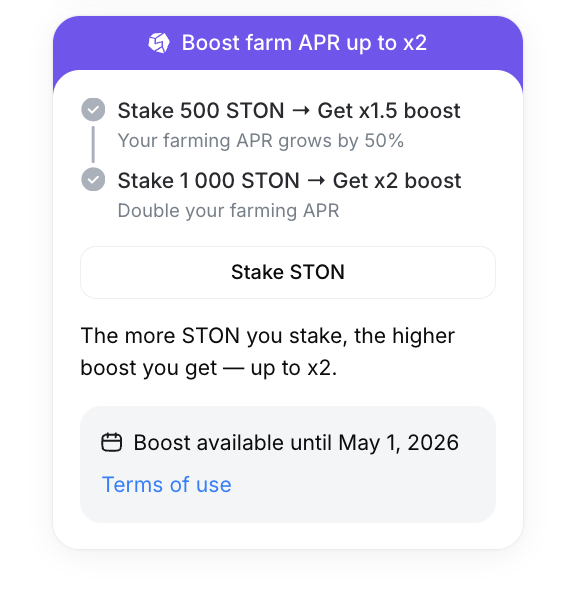
ℹ️ What is Boost Farm APR? The program participants receive an APR multiplier on their farm rewards.To join this program, users need to both stake STON and farm the eligible pool — currently, it’s the STON/USDt V2 pool. Staking 500+ STON gives up to 1.5x farm APR, while staking 1,000+ STON gives up to 2x.
The information card explains the mechanics and helps a user understand how the boost works, what are the limits and what to do next.
4. TradingView charts inside the swap window
In the swap window, users can click the chart icon to open TradingView charts for the selected DEX pair. That means you can check price movement without leaving the swap flow and without opening a separate charting tab manually.
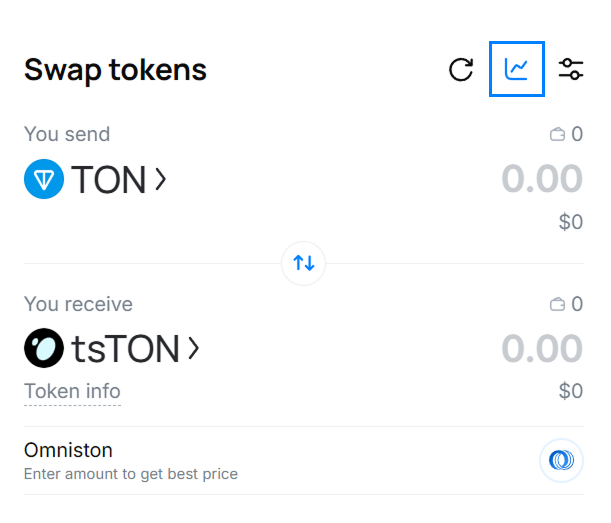
ℹ️ TradingView is a trusted charting platform and social network, and that is exactly why this integration is useful: it gives users a fast way to add market context to a swap decision.
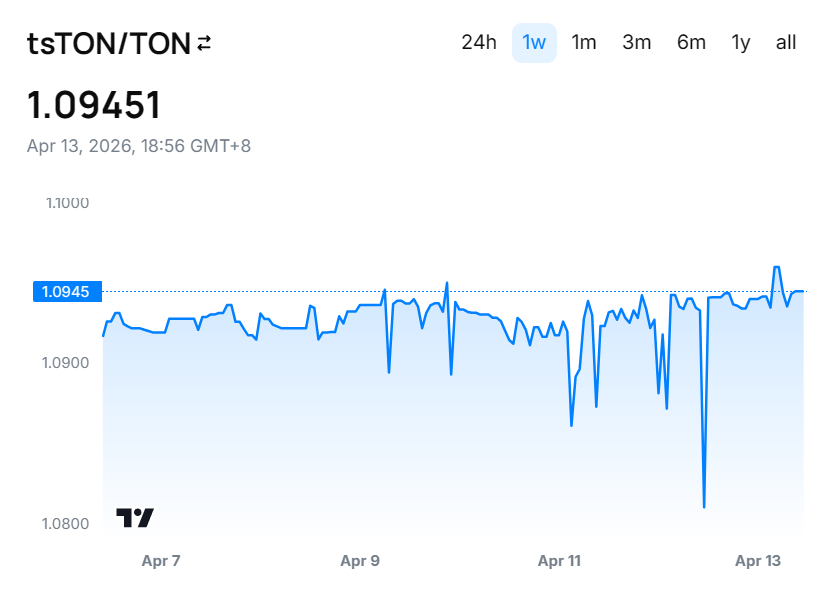
This feature was added at the end of 2025, and soon after that STON.fi also introduced 3-month and 6-month time intervals for additional convenience. That made the chart view more useful for users who want a bit more context than short- or long-term movement alone.
Not every decision needs a full terminal, but having a chart one click away is a bit better than swapping blind.
Final thoughts
Good interface design is not only about helping users execute actions. It is also about helping them understand what they are doing while they act.
That is what these features have in common. Token labels add context before interaction. Token APY in pools makes rewards structure easier to read. Boost Farm APR cards explain campaign mechanics where they matter. TradingView charts bring price context directly into the swap flow.
Together they make the STON.fi dApp easier to read, and that usually leads to better, informed decisions.